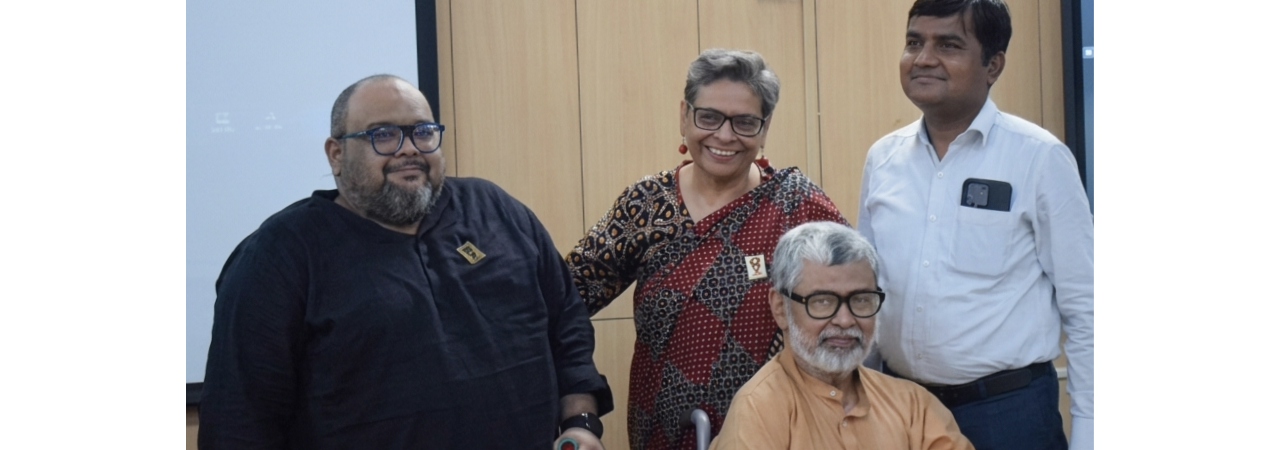
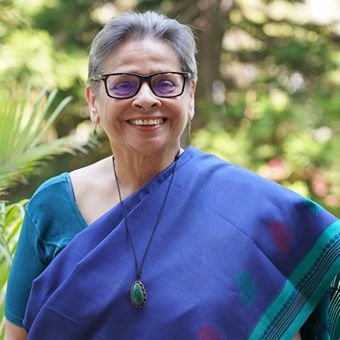
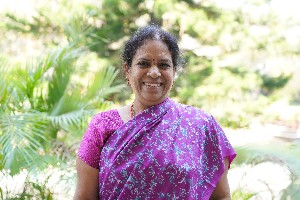
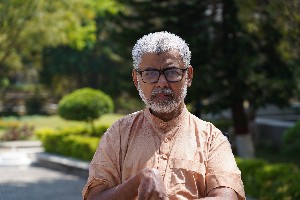
The Centre for Disability Studies engages with disability through law, policy, and lived experience. It works across research, movement-building, and institutional practice to advance rights-based approaches to disability, while critically examining how legal and governance frameworks enable and constrain access, participation, and justice. Its work is grounded in participation, process, and sustained engagement across diverse institutional and community contexts.
About
The CDS examines how disability interacts with law across institutional, social, and lived contexts. Located within a law university yet deeply engaged with movements, courts, and policy spaces, the Centre operates across research, advocacy, and institutional practice.
Philosophy
The Centre understands its role less as producing final answers and more as initiating processes. It approaches its work as a “visualiser” by placing ideas, drafts, and frameworks into circulation so they can be collectively shaped, contested, and carried forward.
Our Work
The CDS works through law reform, reporting, teaching and training, institutional engagement, and documentation. Its practice spans participatory law-making, accessibility research, policy intervention, and long-term engagement with disability communities, courts, and state institutions.
- Law Reform
The Centre has played a key role in disability law reform in India, particularly in processes leading to the Rights of Persons with Disabilities Act, 2016. Its work emphasises participation, iterative drafting, and the recognition that law is shaped as much by process as by final text.
- Reporting and Research
The CDS treats reporting as a strategic intervention rather than documentation. Its work, including the Finding Sizes for All report submitted pursuant to the Supreme Court’s Rajive Raturi judgment, has shaped judicial reasoning and reframed accessibility as a foundational right.
- Recognition
In 2025, the CDS was awarded the Javed Abidi Public Policy Award (NCPEDP–Mphasis Universal Design Awards) for its contributions to accessibility and disability rights in India.
Collaborations
The Centre has worked with the Ministry of Social Justice and Empowerment, international disability research centres, and a wide range of civil society organisations and legal institutions.
Current and Emerging Work
The CDS is currently developing new interventions in areas such as technoableism, inclusion in higher education, and participatory frameworks for governance, alongside long-term work on documentation and archiving.
Contact
Professor Amita Dhanda, Centre Head — amitadhanda@nalsar.ac.in
Padma V.S, Secretary — cdspadma@gmail.com
Nilesh Singit, Distinguished Research Fellow — nileshsingit@nalsar.ac.in
Afrah Asif, Research Associate — afrah.asif@nalsar.ac.in