

Team
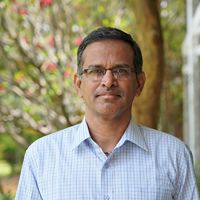
Dr. G. Mallikarjun
Designation: Associate Professor of Law

Mr. M. Suneel Kumar
Designation: President at Legal Empowerment and Assistance for Farmers Society and member at Telangana Agriculture and Farmers Welfare Commission
Publications
CTLR publications include legislative reports, policy briefs, consultation reports, and field documentation related to land governance and tribal rights. These works enable the state to make informed, comprehensive decisions in land governance and also simultaneously contribute to informative academic discussions and policy development with evidence-based reforms in land administration.
News on Centre Activities
Recognition of CTLR’s Land Records Model by the Government of Telangana (2017)
- The community-driven land records updation pilot, initially undertaken in six villages, was officially appreciated by both the State Government and the Government of India.
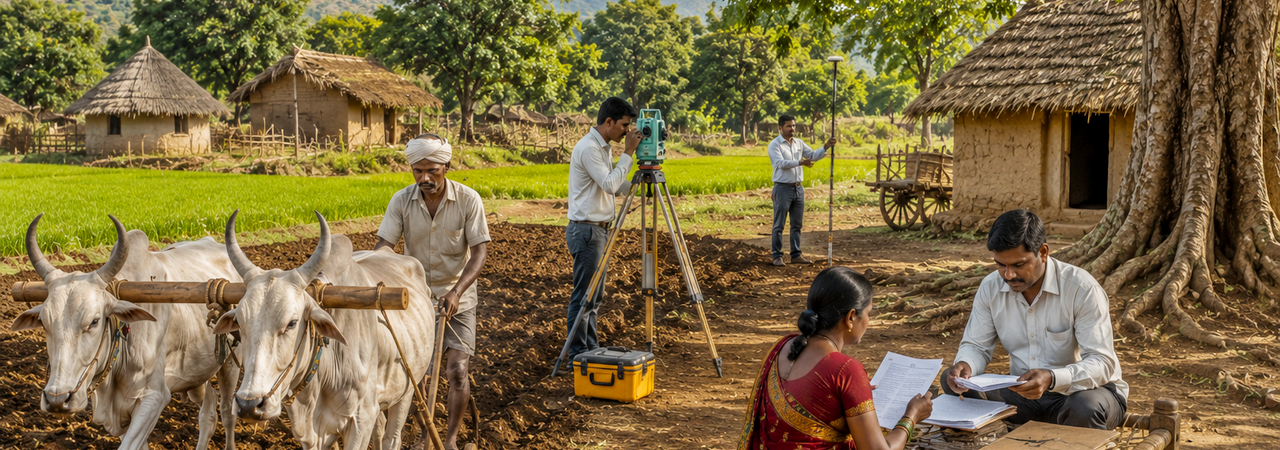
- The Centre utilized a multi-dimensional approach to address land issues, which included household surveys, physical inventory of land, and land records verification.
- Through the successful implementation of this pilot model, a tribal village named Puttalabhupati became entirely free from land problems.
- The process demonstrated that the effective participation of the community, particularly the involvement of local youth under the supervision of landowners, can significantly contribute to making land records mirror ground realities and resolving existing land disputes.
Events
District-Level Consultations on Land Governance (2016–2017)
- CTLR organized district-level stakeholder consultations across ten districts in collaboration with Landesa and the respective district administrations.
- These meetings were held at various district headquarters to discuss and understand the diverse perspectives and aspirations of the public regarding land governance.
- The primary objective of these localized consultations was to receive direct inputs and feedback on the necessary changes required in existing land laws.
- Participants represented a broad range of stakeholders, including revenue department officials, farmer groups, civil society organizations, women’s federations, academia, and other interest groups.
State-Level Consultations on Tribal Land Administration (2017)
- The Centre hosted a dedicated state-level workshop titled ‘Land Governance in Tribal Areas: Issues and Perspectives’ on May 18, 2017, at the NALSAR campus.
- The event featured an address by Shri. Azmeera Chandu Lal, the Hon’ble Minister for Tribal Welfare, highlighted that tribal populations in Telangana suffer from inaccurate land records and insecure land rights.
- During the consultation, the Minister formally appreciated CTLR’s efforts in reviewing land legislations with a specialized focus on safeguarding the rights of tribal communities.
Legal Support for Andhra Pradesh Land Resurvey (2022)
- Following an MoU with the Government of Andhra Pradesh, NALSAR, through the CTLR, has taken a leading role in providing legal consultancy for the state’s extensive land resurvey initiative.
- The Centre offers vital legal guidance and assistance to the Department of Revenue for the “YSR Jagananna Saswatha Bhu Hakku Mariyu Bhu Raksha” scheme.
- CTLR helps draft and revise land laws, rules, and directives to support resurvey efforts and trains revenue officials and stakeholders to ensure the legal integrity of new land records.
- A primary aim of this partnership is to develop a framework for resolving long-standing land disputes uncovered during the survey.
Activities of CTLR Undertaken During the Year 2025–2026
- In collaboration with LEAFS (Legal Empowerment and Assistance for Farmers Society), CTLR organized 75 days of discussions from January 26, 2025, to April 10, 2025, focusing on the significance of 75 years of the Indian Constitution and its achievements in relation to agriculture, farming techniques, agricultural models, public policies, legal frameworks, grievance redressal mechanisms for issues such as fake seeds, and the benefits available under various Central and State Government schemes and subsidies.
- CTLR, in collaboration with LEAFS, established several initiatives, including “Saagu Nyaya Kendralu,” “Bhunyaya Shibiralu,” “Nyaya Ganta,” “Saagu Nyayam” YouTube Channel, “Bhumi Samvaad,” Agri Legal Aid Clinics, “Saagu Bhumi Chettalu,” and “Bhumi Sangathulu” YouTube Channel, all aimed at addressing land and agriculture-related issues, providing legal support, and conducting awareness and sensitization programmes.
- CTLR promotes and supports internship programmes for law students to equip them with practical knowledge of land laws, governance, and related legal issues.
- CTLR has been actively engaged in consultations on policy matters relating to the Bhu Bharati Act, 2025, in coordination with local revenue officials, while also sensitizing nearby villagers regarding the procedure for regularization of ‘Sadabinama’ transactions.
Collaboration with TCR&TI
- Building on its long-standing focus on tribal welfare, CTLR has partnered with the Tribal Cultural Research and Training Institute (TCR&TI) under the Government of Telangana.
- This partnership focuses on enhancing research, field documentation, and policy advocacy regarding tribal land access and customary practices.
- The collaboration aims to increase legal awareness and protect the rights of tribal communities residing in Scheduled Areas across the state.
Training Programmes for Paralegals and Officials (Ongoing)
- The Centre has successfully trained approximately one thousand paralegals, who have collectively assisted in resolving over one million land problems for the poor and landless.
- In Warangal District alone, the Land Rights Legal Aid Clinic trained around 4,000 individuals on land matters, including paralegal volunteers, Self-Help Group (SHG) women, Anganwadi workers, students, police and revenue officers, advocates, and media personnel.
- CTLR consistently conducts specialized capacity-building programs for government officials, providing training to various stakeholders working on land, including revenue, forest, and tribal welfare officials.
- Specific governmental training initiatives include a one-day program for Forest Officers on land laws and litigation held on December 21, 2016, and a dedicated training session for Village Revenue Officers (VROs) in Nalgonda district on maintaining proper land records held on October 7, 2015.
Courses Offered
Land Rights Clinical Course
4-Credit Clinical Course
The Centre offers a 4-credit Land Rights Clinical Course for fourth- and fifth-year Law students, bridging classroom theory and practical legal work in land law. This course provides students with both doctrinal knowledge and hands-on skills to handle land disputes and administrative tasks. It covers essential topics like land records, title verification, land acquisition law, land reforms, Land Ceiling legislation, laws concerning Scheduled Areas and Assigned Lands, and Real Estate Regulation.
As a result, students learn to interact effectively with revenue authorities and the public on land and property issues, understand procedural requirements for civil and revenue court cases, and critically evaluate land disputes and later offer legal aid and advice to the aggrieved persons. They also explore how the law can facilitate peaceful resolutions between Citizens and Revenue authorities.
A key aspect of the Clinic is its focus on experiential learning, in which students visit revenue offices, courts, and regulatory agencies and participate in hands-on activities such as drafting pleadings, conducting due diligence, analyzing real case scenarios, conducting legal research, and providing legal aid. Their evaluation includes project work, drafting tasks, and presentations that demonstrate the practical legal skills they acquire during their time in the Clinic.